Learning system · Curriculum design
A year-long Pre-Algebra learning system.
I built a connected notebook to help learners move from an explanation to a worked example, guided practice, and independent work—and return to the idea when they need it again.
01 · Plan the sequence
Start with the skill beneath the standard.
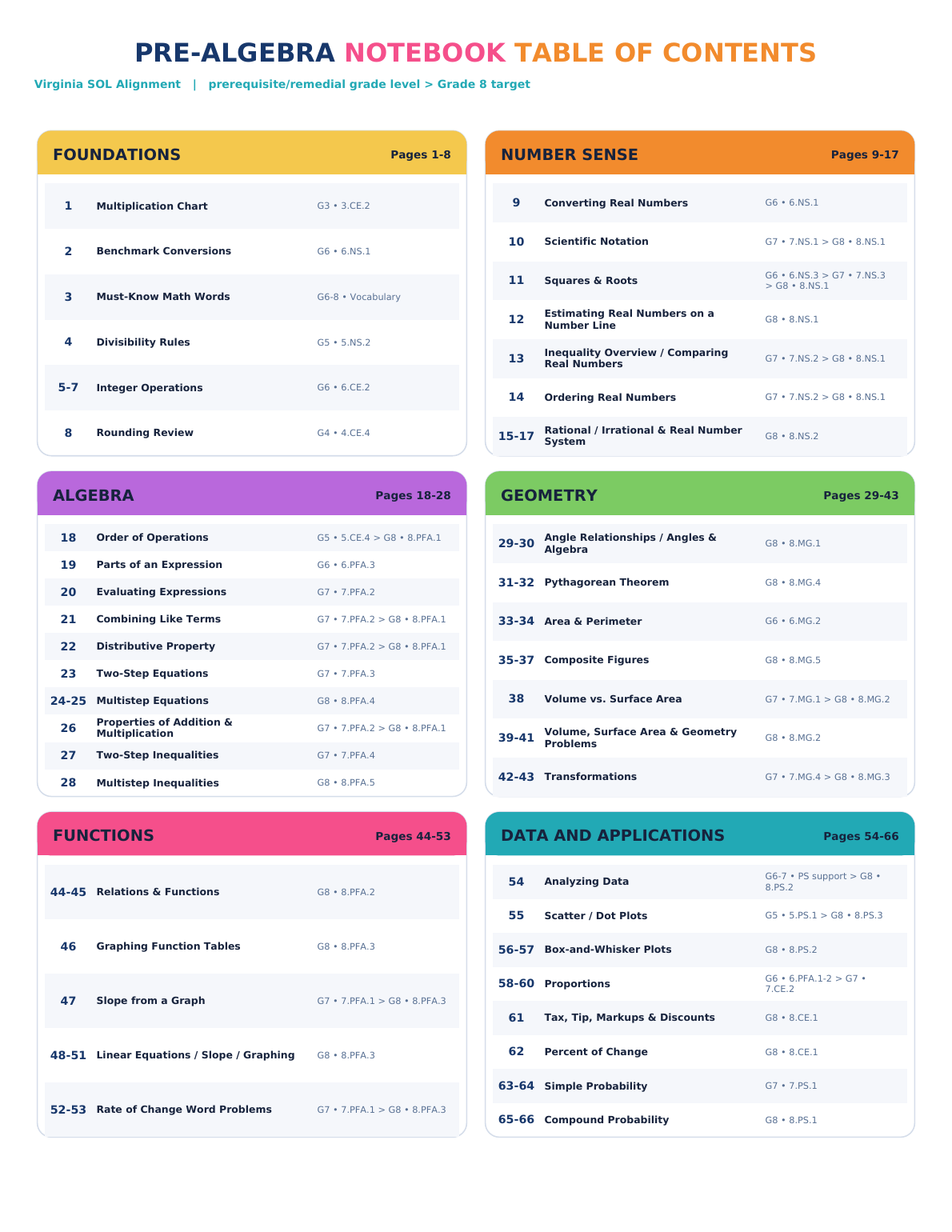
I mapped the notebook topics to Virginia Grade 8 standards and identified earlier-grade skills that students may need first. This makes the prerequisite visible instead of treating a Grade 8 target as a single isolated lesson.
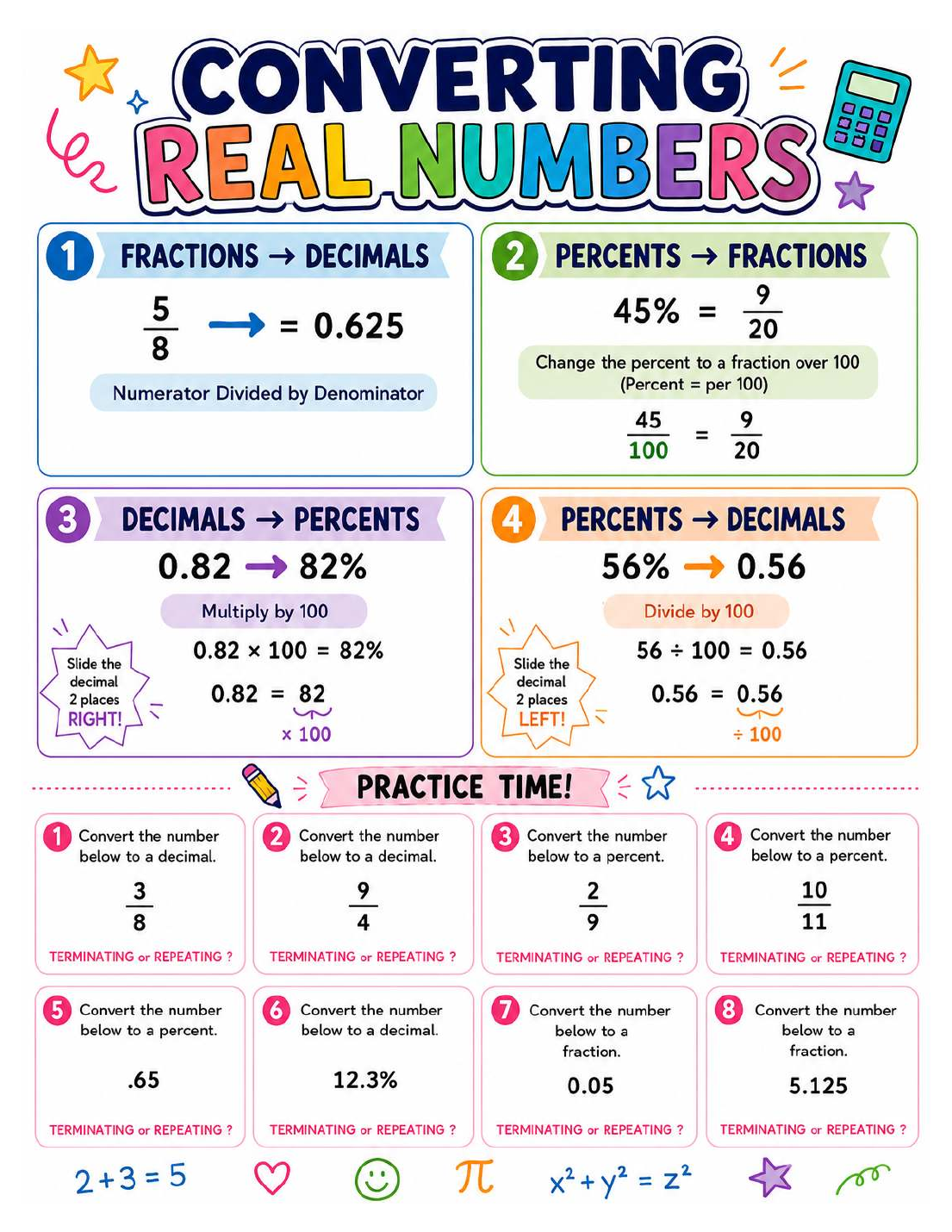
Convert representations: the map places decimal, fraction, and percent conversions with Grade 6 number sense (6.NS.1).
Compare and order: Grade 7 number sense (7.NS.2) leads to the Grade 8 real-number target (8.NS.1).
02 · Review the building blocks
Revisit the skills before ordering.
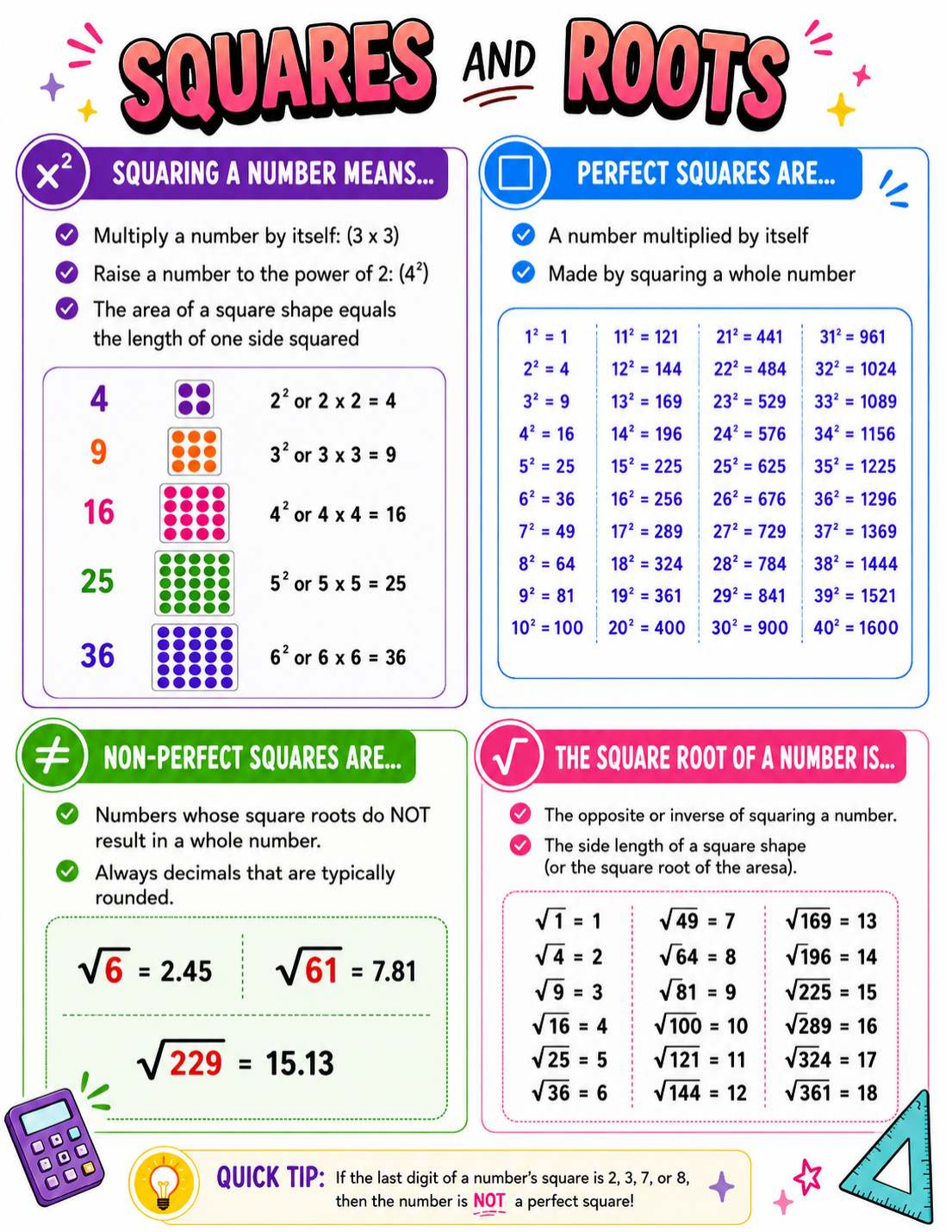
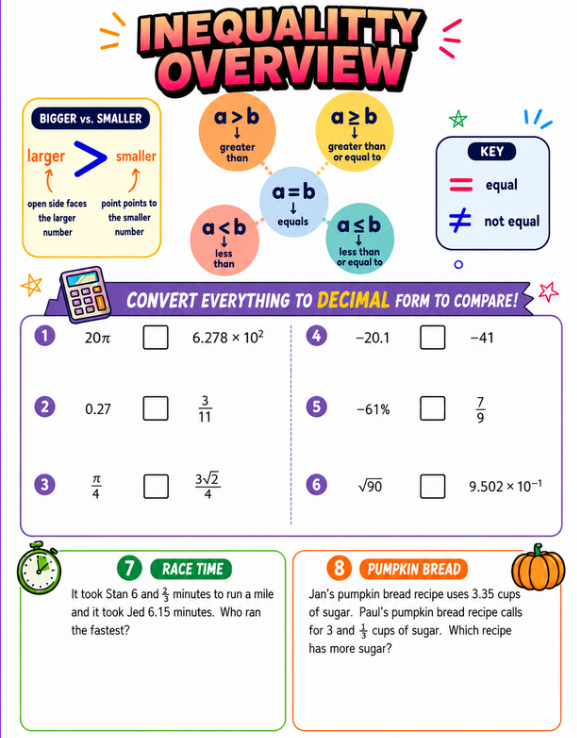
These notebook pages come before the ordering lesson. Students review converting representations, interpreting square roots, and comparing values before they put different forms into one ordered list.
03 · Design the page
Move from a model to a decision.
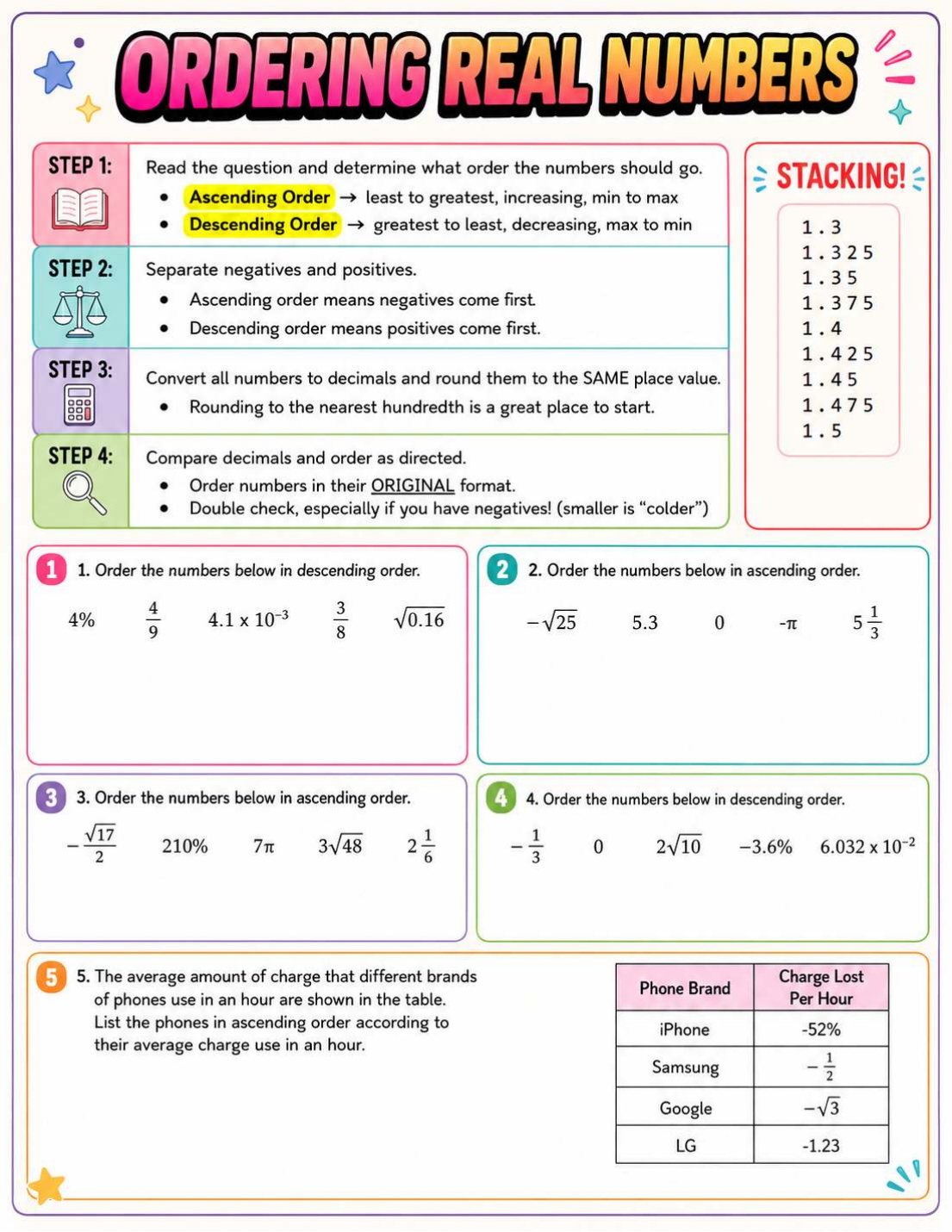
Each page has a job in the learning sequence. I pair plain-language explanations and visual models with worked examples, then give students a small step to try before asking for more independent work.
On this ordering page, students first decide whether the list is ascending or descending, separate positive and negative values, convert to decimals, and stack the results to compare. The partner check and team game below ask them to use that method with new sets of values.
04 · Revise through use
The quick responses and students’ written work show where I need to clarify a term, revisit a visual, or adjust the next practice task. The notebook remains a reference students can return to as later topics build on earlier ones.
05 · Check for transfer
Use paired practice to see what students can do.
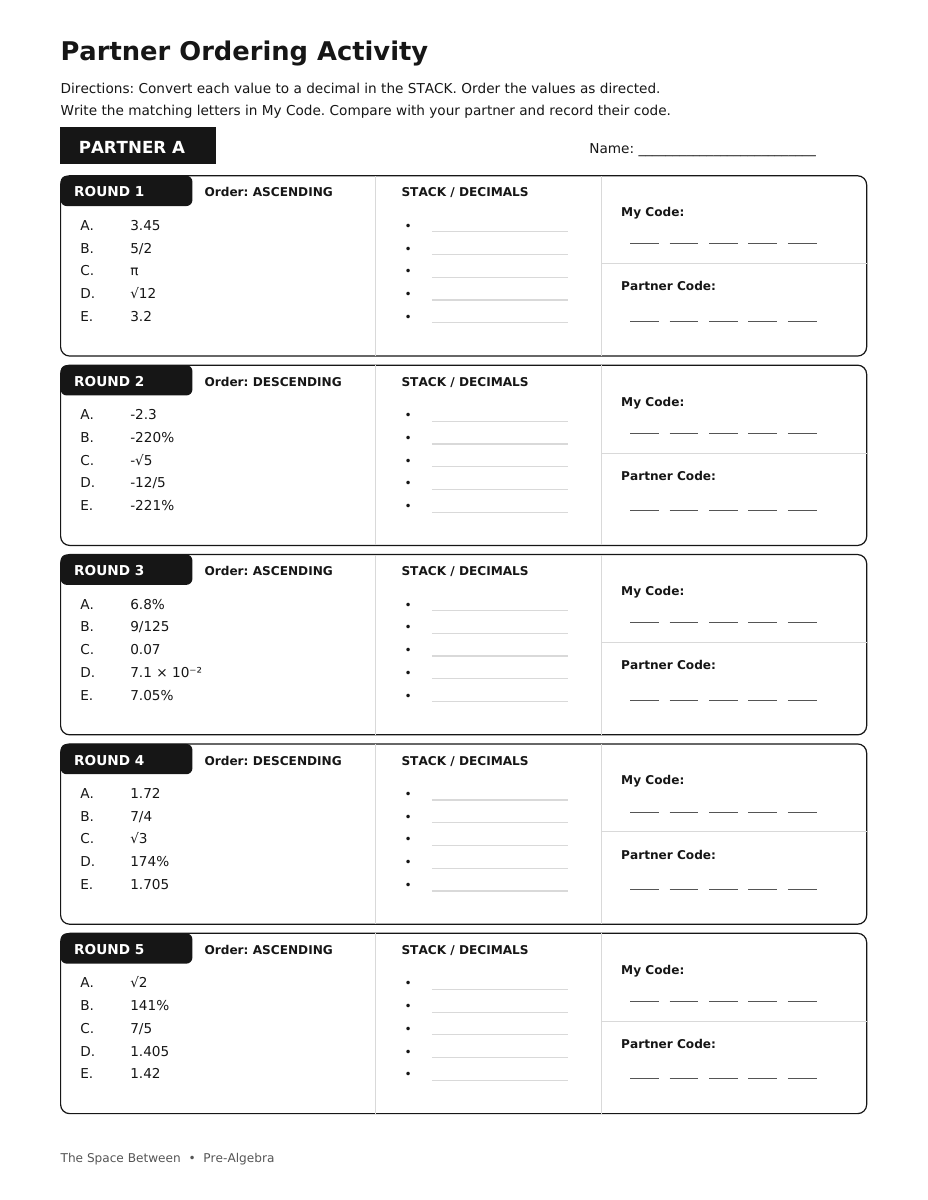
In the real-number strand of the notebook, students move from representing values as decimals to comparing and ordering them. This partner activity offers a parallel A/B check: each student converts five values, orders them, and compares codes with a partner across five rounds.
The work in the stack helps me see whether an error came from the conversion or the comparison. Partner A and B give students the same kind of challenge with different numbers.
06 · Review in teams
Extend the practice through team review.
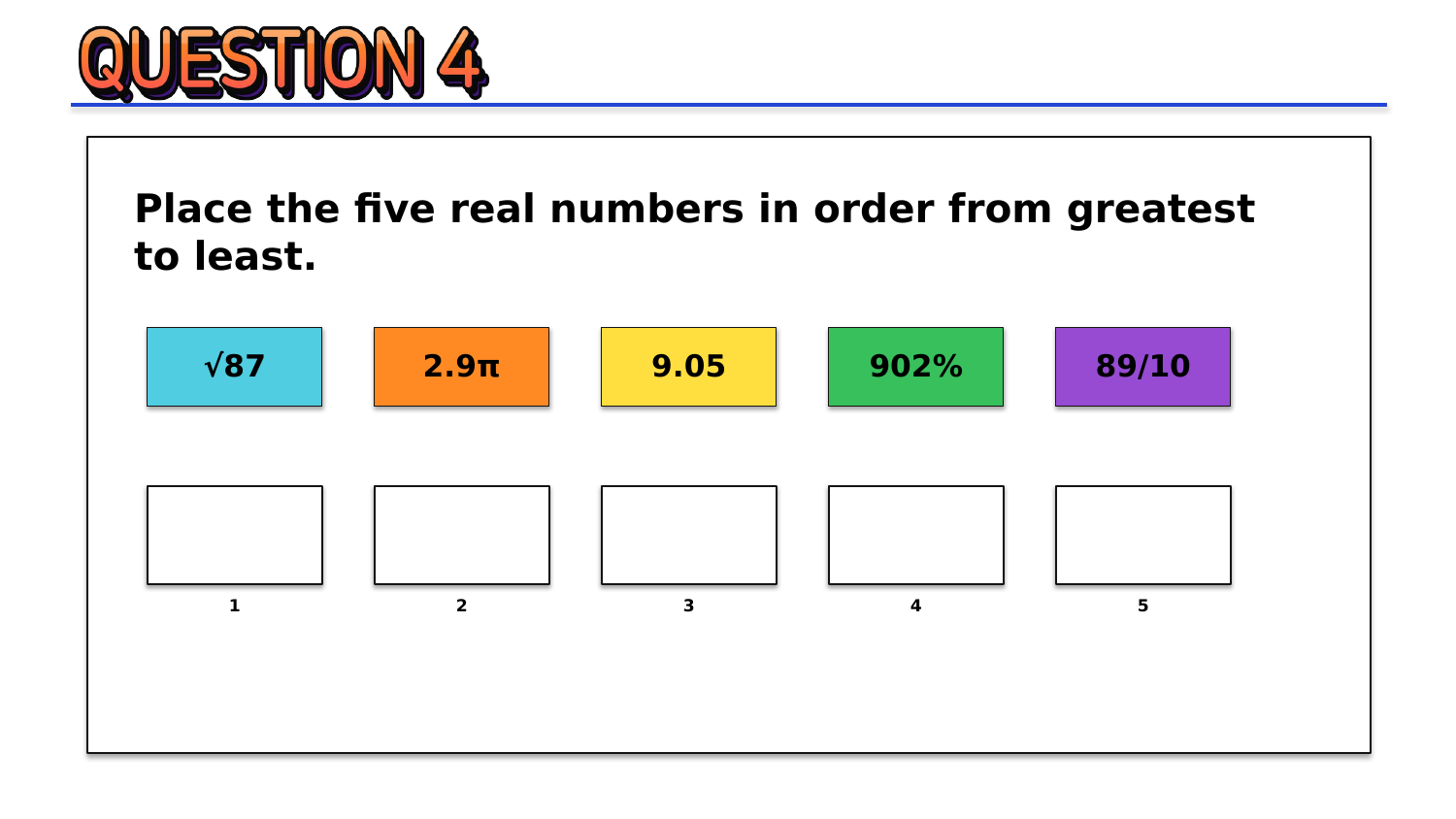
In the Real Numbers Team Challenge, every student solves a question before the team reveals answers together. The 16 questions mix ordering, comparing, estimating roots, and representing real numbers, so students have to choose the right approach rather than repeat one format.
07 · Revisit with cards
Give the same skill more than one way to practice.
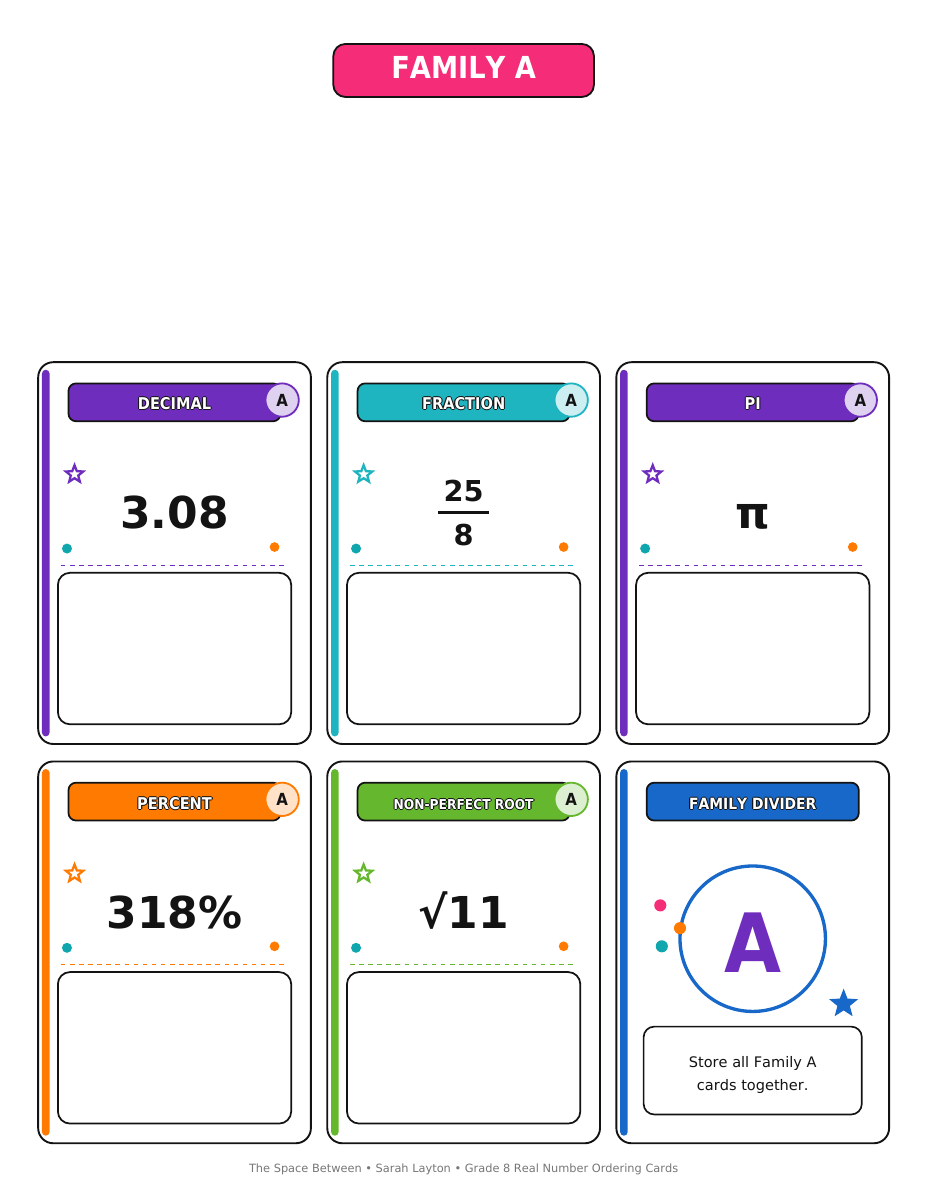
These lettered card families let students order a set with the same representation first, then work with mixed decimals, fractions, percents, roots, and π. A blank box on each card holds the conversion or estimate that explains the order.