Language access · Lesson design
One lesson, three language versions.
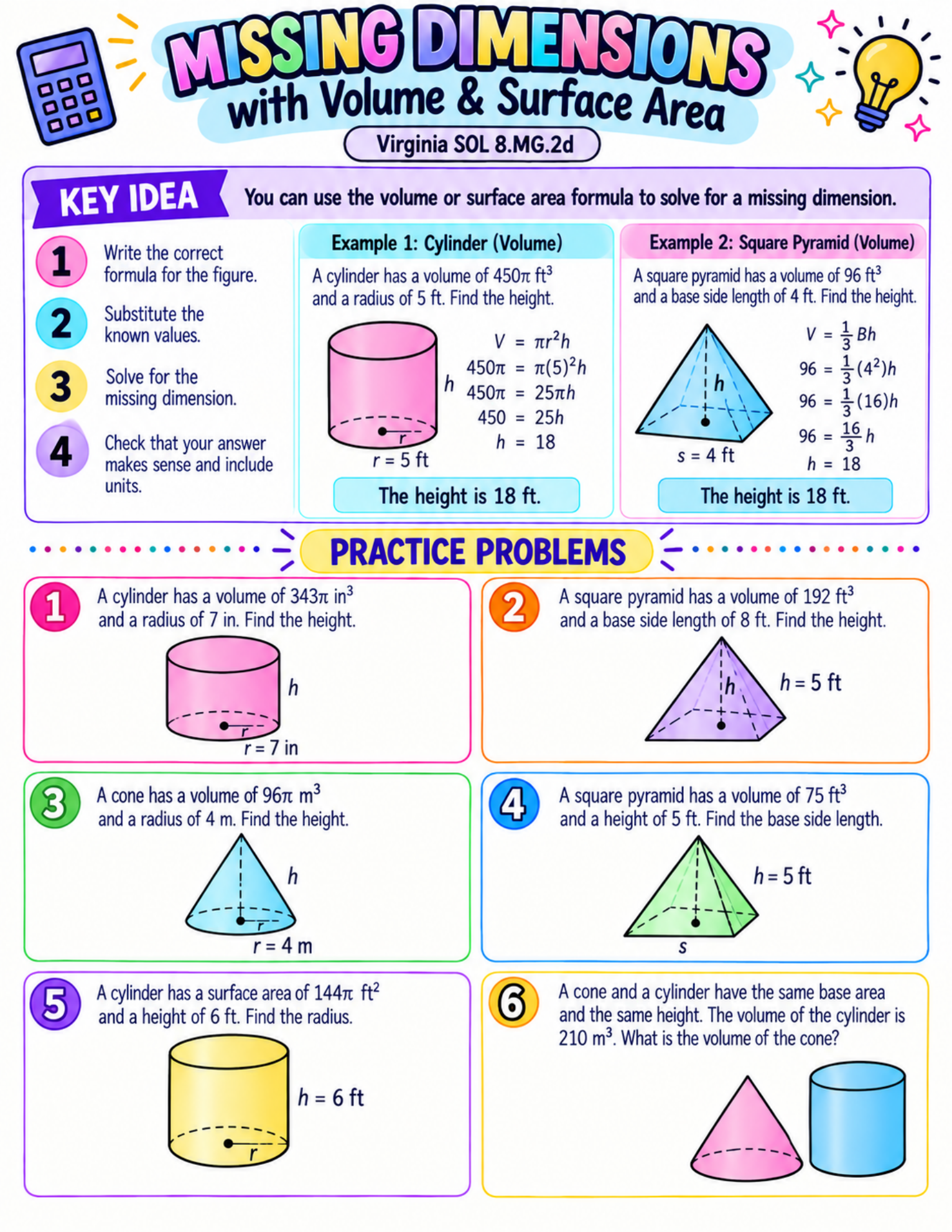
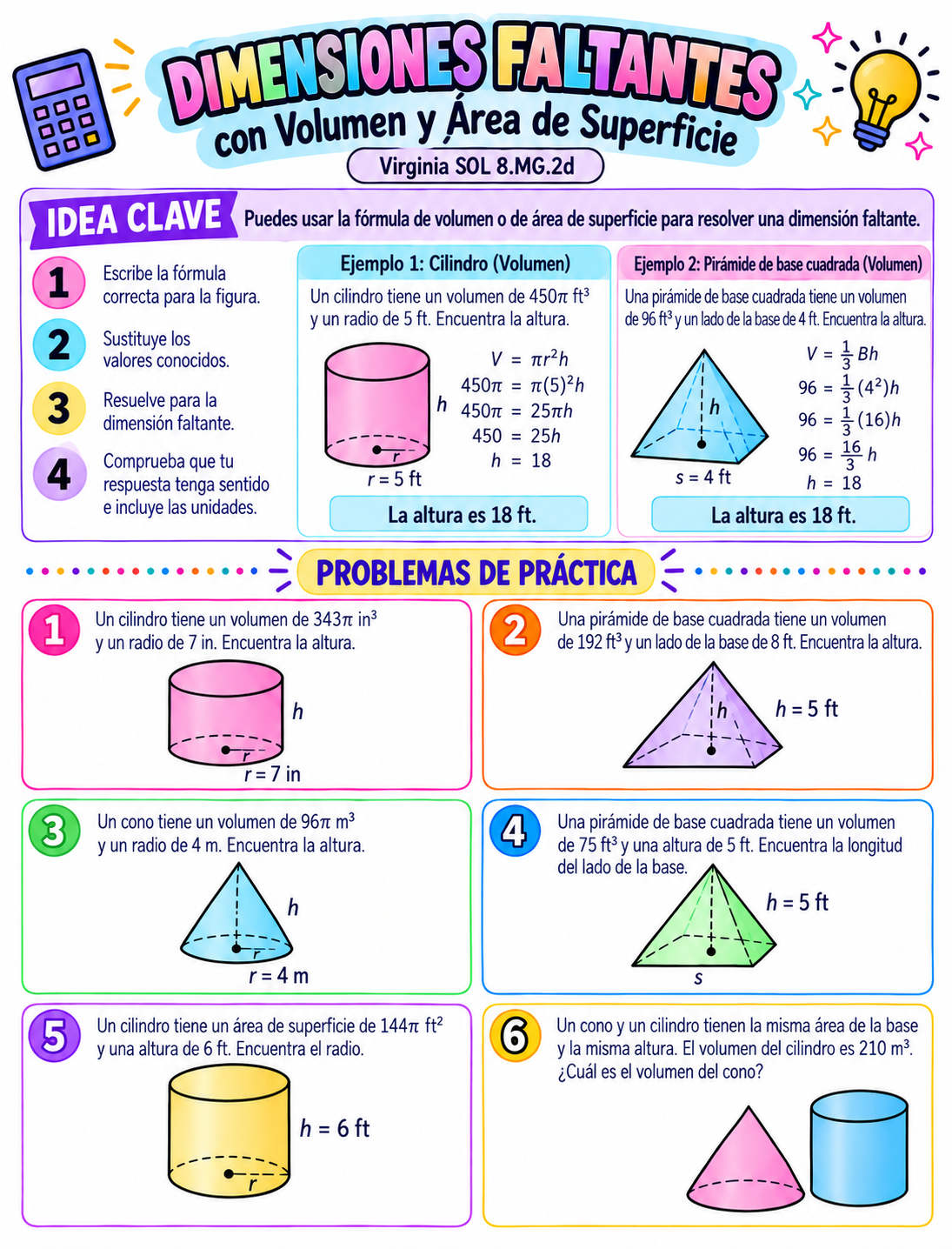
Students use volume and surface area to find unknown measurements in English, Spanish, and Mandarin.
When students learn mathematics through a language they are still acquiring, changing the words alone is not enough. Directions, vocabulary, worked examples, diagrams, and the order of practice all affect whether they can access the lesson.
I want multilingual learners to participate in the same instruction, with the same learning goal and level of challenge as their peers. These pages show one example: the English missing-dimensions lesson from my Pre-Algebra notebook alongside Spanish and Mandarin adaptations. Each follows two worked examples with six problems that ask students to work backward from volume or surface area to an unknown measurement.
Across languages, I preserve the lesson sequence, mathematical values, visual models, and opportunities to practice. The language support changes; the expectation for learning does not. I have also adapted the larger instructional notebook in Mandarin so a Mandarin-speaking student can follow the lessons with the class.
Technology can help with an initial translation, but I still compare the vocabulary, mathematics, diagrams, and page layout with the original instructional purpose. Technology can translate the words. The design work is making sure the learning survives the translation.
English
Español
中文
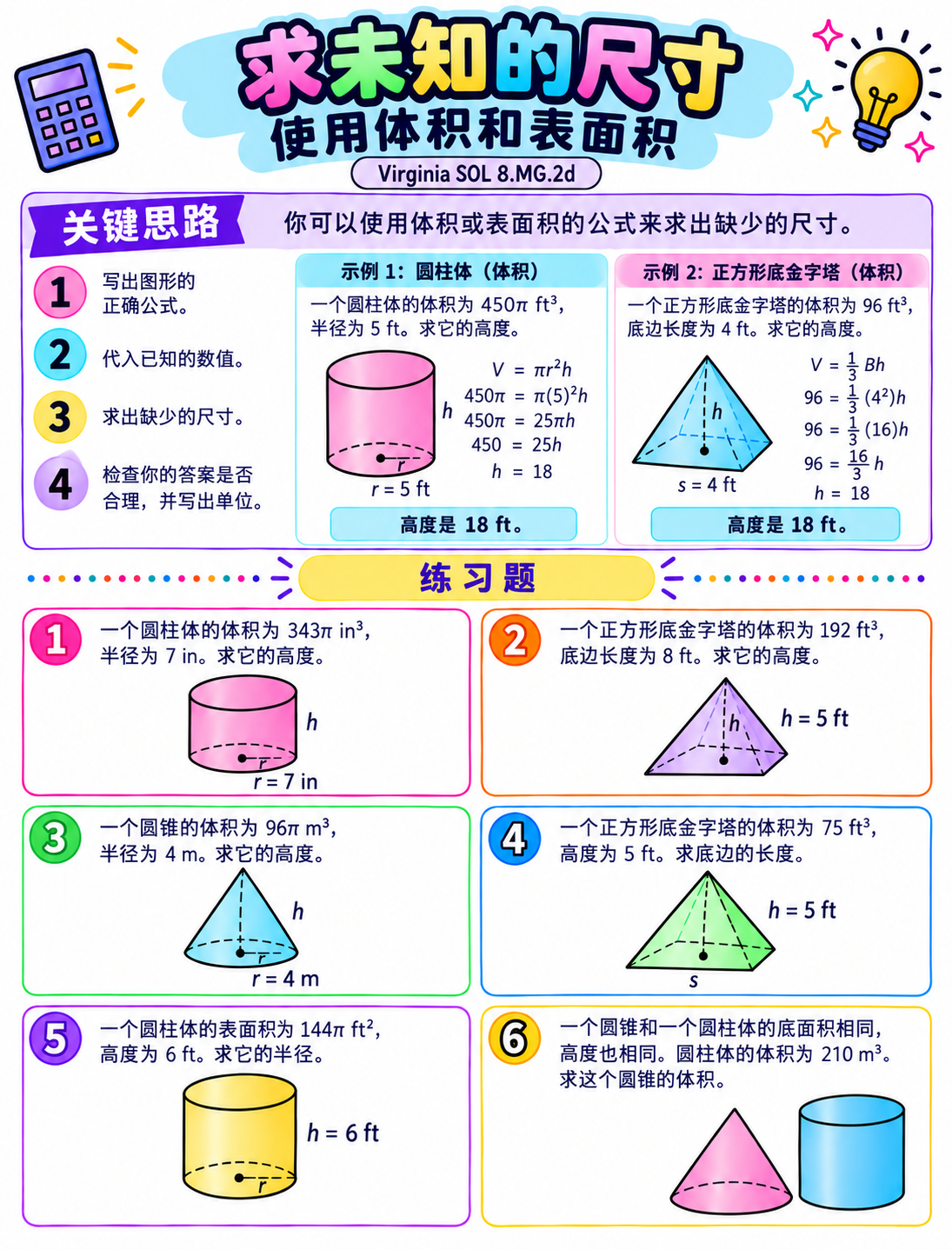
English shows the original notebook page; the Spanish and Mandarin pages are translated adaptations of its examples and problems.